Passion In Action Ventana
Designing Future Ambient Interactions

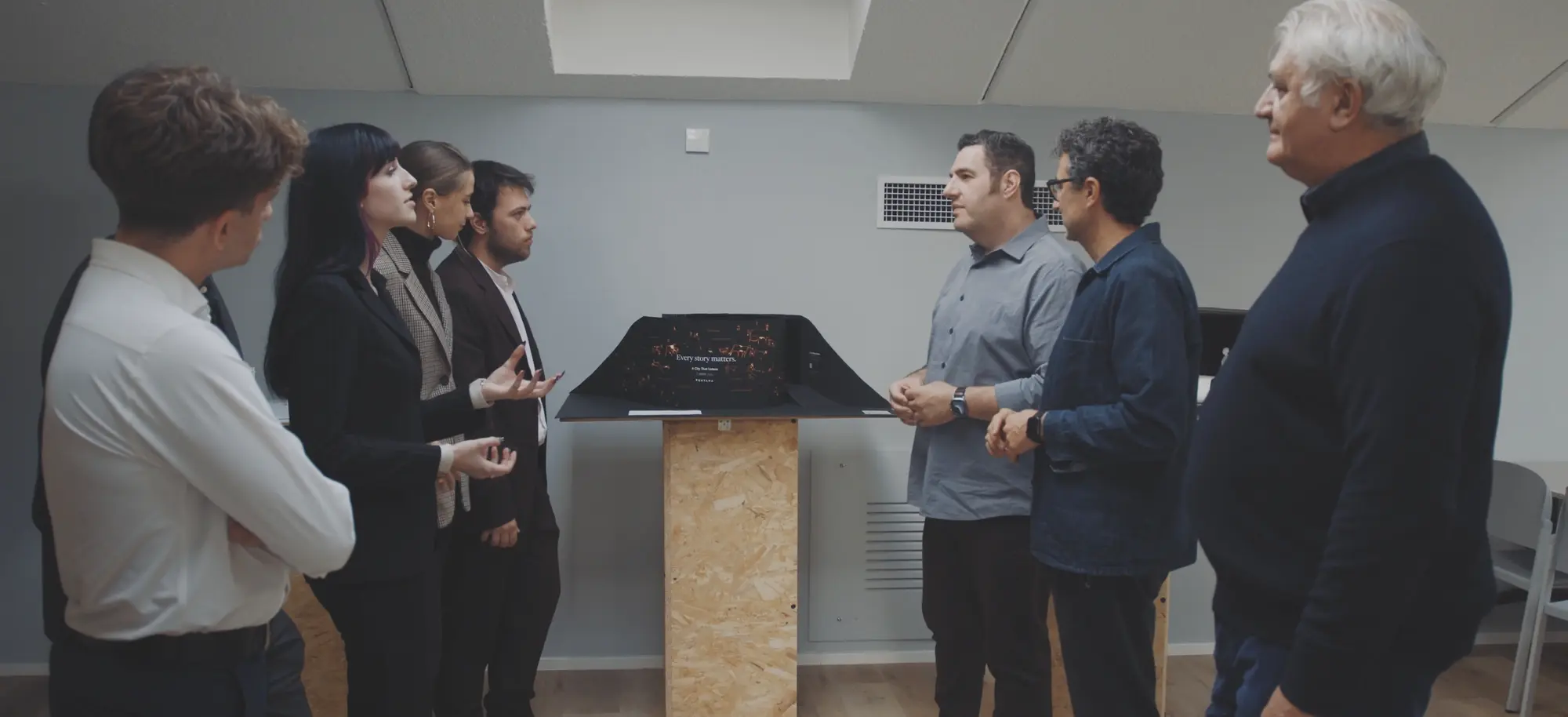
The sixth episode of the Sky Arte series “Viaggi di Segno: Storie di bellezza e creatività italiana”, curated by Francesca Concina and Camilla Bellini, features Designing Future Ambient Interactions, a Passion in Action (PIA) promoted by the School of Design at Politecnico di Milano.
Ventana and Passion in Action: designing new interaction surfaces
Developed in collaboration with VentanaDesign – a US-based company specializing in modular microLED surfaces – the project offered a multidisciplinary group of students the opportunity to explore new ways of conceiving space, technology, and digital interactions.
Traditionally, screens are elements that are “placed onto” spaces: monitors, displays, or panels that interrupt surfaces and volumes. Ventana proposes an alternative vision, conceiving the screen as a true architectural material, integrated and continuous, comparable to wood, stone, metal, or ceramic.
This design challenge formed the basis of Designing Future Ambient Interactions, a Passion in Action (PIA) by Politecnico di Milano that invited students to imagine how digital surfaces could transform the environments we inhabit, support new forms of interaction, enrich sensory experiences, and create a more fluid relationship between content, architecture, and everyday life.
Passion in Action projects are educational initiatives at Politecnico di Milano, open to students from across the University and focused on emerging, experimental, and cross-disciplinary themes. They offer opportunitiesto develop non-conventional skills, explore new design languages, work in multidisciplinary teams, and engage with companies, professionals, and experts. Within this framework, Designing Future Ambient Interactions stands as a clear example of the educational value of PIAs, bringing together research, experimentation, and collaboration across disciplines.
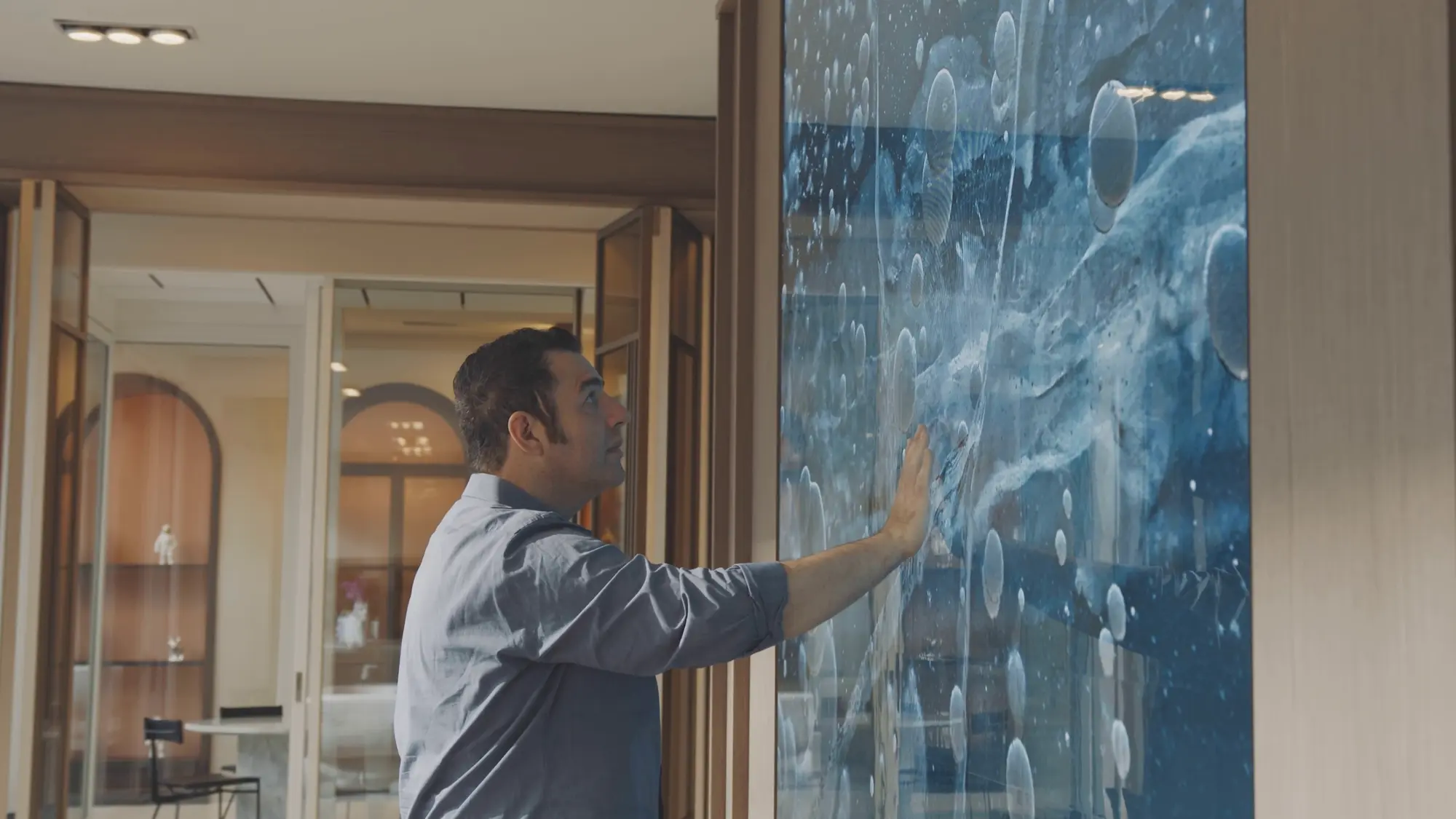
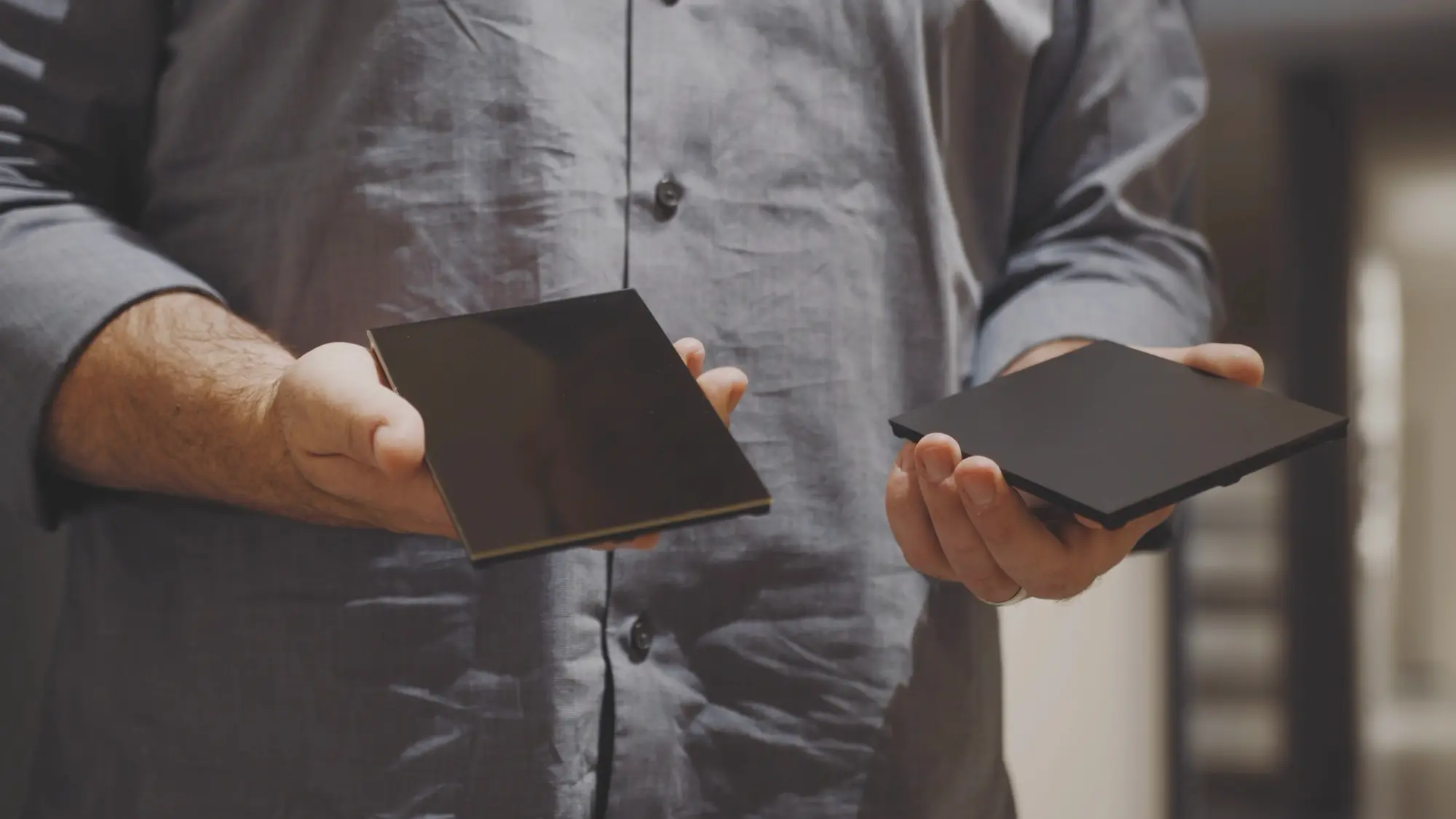
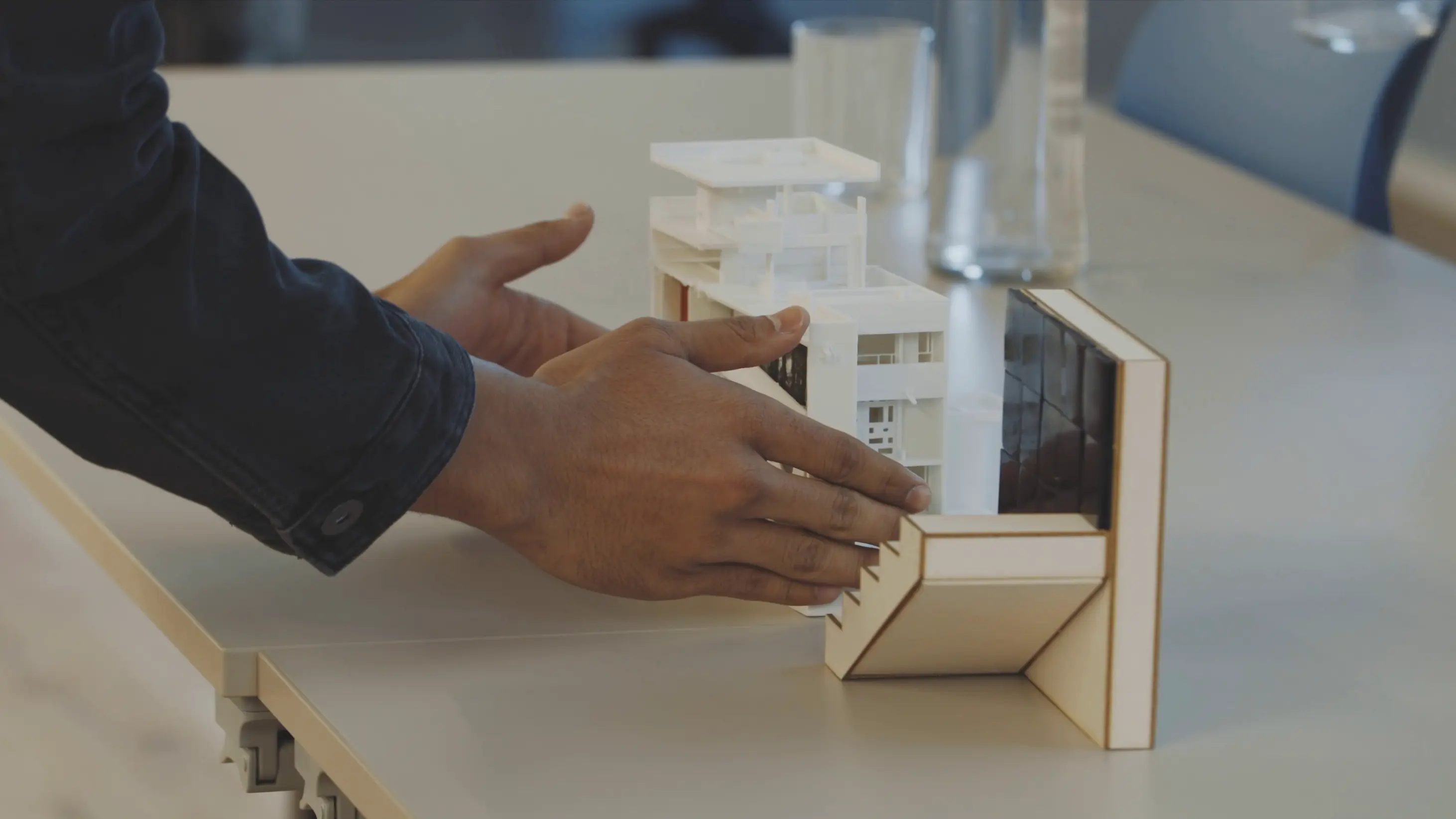
The goal of the project was not to design individual objects, but to build usage scenarios: new ways of living, working, shopping, visiting, and experiencing spaces through the diffusion of digital surfaces. At the core of the experimentation is Ventana, a high-end microLED tile that is ultra-thin, flexible, and modular, enabling students to move beyond the idea of the “screen-as-object” and explore dynamic interactive walls, immersive and responsive environments, multispecies sensory configurations, adaptive workspaces, and digital landscapes integrated into architecture.
The project also fostered broader reflection on digital surfaces as a new cultural layer of space, where content, movement, and interaction become integral to architectural identity.
An interdisciplinary laboratory at Politecnico di Milano
The project involved 40 students from 13 degree programs across all four Schools of the University. In particular, the School of Design was represented by several tracks, including Product Design, Interior Design, and Communication Design, as well as other cross-disciplinary programs. All participants were actively involved in this interdisciplinary workshop.
The project was coordinated by Professor Venanzio Arquilla and Professor Emmanuele Villani from the Department of Design and developed through workshops, experimentation, iterative reviews, and collaborative sessions with the Ventana team—Jeremy Hochman (Founder & CEO), Itir Eraslan, Deniz Erkol Gorlini, and Silvia Gorlini(SANTASOFIA27). The initiative also involved external cultural institutions, such as the ADI Design Museum, which contributed to the project’s value and visibility.
Under the guidance of the School, students brought diverse forms of knowledge—technical, design-related, and cultural—integrating them into shared, future-oriented visions.

Project outcomes
A total of 13 projects were developed and evaluated based on coherence, innovation, impact, and quality of experience. The three awarded projects were:
- Noesis
Lisa Ascari, Camilla Boggi, Isacco Comi - A City That Listens
Davide Carabellese, Lorenzo Crivelli, Davide Gentilini, Antonella Rattini, Rosanna Tempesta Lavinia - Responsive Workspaces
Shaikh Munazzar Arshad, Singh Shivam
These projects demonstrate how scenario-based prototyping can generate complex and transformative visions of the relationship between people, technology, and space, within an innovative educational framework.
In this context, Politecnico di Milano is developing educational approaches capable of:
- combining technological innovation with design culture;
- fostering collaboration across disciplines;
- connecting students, companies, and cultural institutions;
- exploring new forms of ambient interaction;
- activating replicable processes of research and experimentation.
A vision in which technology is not merely a tool, but a platform for imagining experiences, identities, and possible futures.

List of Participants
Tempesta Lavinia Rosanna, Yilmaz Betül Özlem, Kaynar Tuana, Hoveydi Tahmineh, Gurkok Zeynep, Ulukhanova Elene, Zeleke Yonathan Ayalew, Carabellese Davide, Sullcapuma Gaia, Ibrahim Arwa, Shaikh Munazzar Arshad, Singh Shivam, Cui Tianli, Hu Chenjie, Rossi Matteo, Yezza Yasmin, Kalantari Parisa, Selmi Maali, Qian Chen, Frer Andrea, Cheng Yining, OzturkDoga Bercin, Baracchi Gaia, Reversi Cecilia, Das Bipasa, Ranzani Gaia, Boggi Camilla, Ascari Lisa, Gurkok Mario, Magnacavallo Alessio, Comi Isacco, Rattini Antonella, Maiani Matteo, Anchi Koichiro, Taslaoanu Ioana Catalina, Shcheglova Vitalina, Rocco Mattia, Zhang Yiwei, Mazzotti Sofia, Marcuzzi Sara, Gentilini Davide, Crivelli Lorenzo, Li Enquan.