
The exhibition, born from the research activities of ABC, Design and Chemistry Departments, is curated by Prof. Ingrid Paoletti and Prof. Anna Barbara.
Through the metaphor of a tree, resilient micro architecture par excellence, the exhibition wants to tell the resilient behavior of materials capable of transforming adversity into vital advantages, with the aim of knowing these models of natural resilience to develop advanced building systems.
MaTres shows the resilient behavior of wood fibers, vessels, longitudinal and transverse, and the central pith through the use of materials that come from the culture of architecture, interior spaces, and fashion. From natural composite materials (mycelium, spent coffee, cellulose) to 4D printing, from energy-producing plants to fabrics with optical, acoustic or heat-sensitive properties to natural or recycled fibers, reacting virtuously to stressful stimulations.
The environments in which we live and the materials that make up the scenarios of the near future must have a high resilience to the increasingly unpredictable and extreme conditions of climate and weather. Materials must protect ecosystems from exogenous attacks, must be able to absorb the impact of radical transformations and change irreversible paradigms into new forms of life.
From resilient materials will begin the transformation of spaces, places, relationships between natural and built environment and these materials will be assumed as actors and protagonists with their forms, behaviors, qualities, temporality, intentionality and not vice versa.
The origin, the study under the microscope, the computational design, the life cycle of the materials start a resilient design model to be available for a conscious and responsible future.
In this policy of matter, the choices will be guided by the environment, nature and life, which will cross in a new continuum, creating an increasingly integrated and resilient system.
The installation is a potential material library that will have to be implemented over time through a new alliance and new balances between materials, spaces and new technologies. It collects a research by the departments involved on the potentialities emerging from the exploration of new materials. Design becomes a generative discipline that accompanies the material from its creation to its installation, performance and expression in space. The Department of Design has contributed to the curatorship and planning of Mat.Res in close relationship with the interdepartmental team that has been created; it has designed and produced some of the materials in the installation in its laboratories, and has explored the resilient potential of some existing materials in collaboration with manufacturers.
Material-Resiliency - From a microscope to a prototype for a resilient architecture
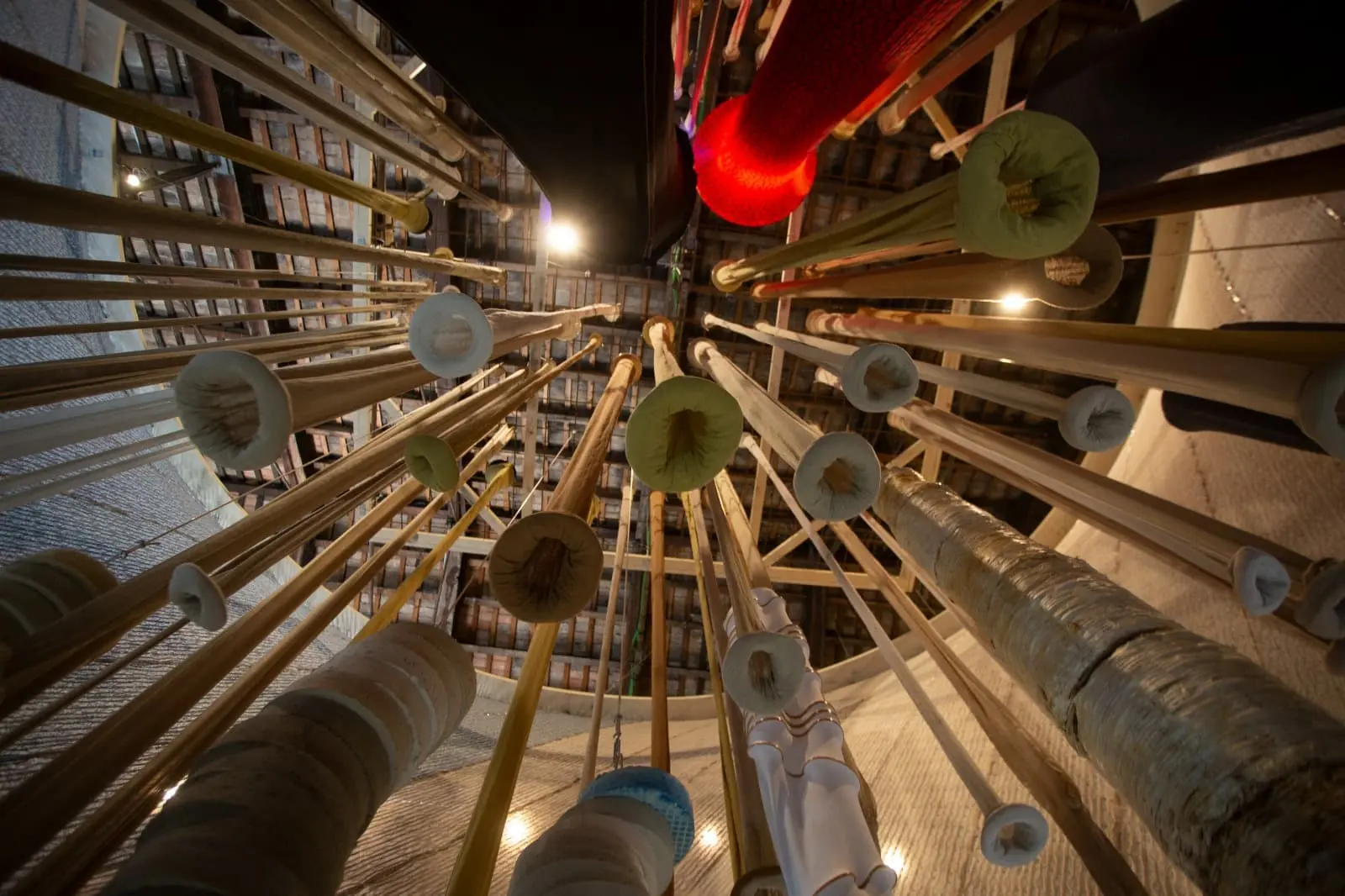
In the Italian Pavilion of the Biennale di Venezia, opened on May 22 and running until November 21, 2021, MatRes is on display, a living laboratory of resilient materials, with biological, organic, sustainable and recycled origin, capable of growing and transforming over time.
Matres' contributions include:
AMOTEX
Designer: Anna Barbara (PoliMI, Design Dep.) with Simone Bodo,
Producer: Alessandro Simoni
AMOTEX is a composite material with electromagnetic protection characteristics. It is a pure virgin wool knit woven with amorphous microfilaments that protect from electromagnetic waves based on the principle of energy absorption by "skin effect". Being micro, the metallic filament can be processed with natural or synthetic fibers without changing the original properties of the fabrics.
BIOTAPE
Design: Giovanni Maria Conti, Martina Motta, Patrizio Terzi (PoliMI, Design Dep.)
Production: Lanificio dell’Olivo
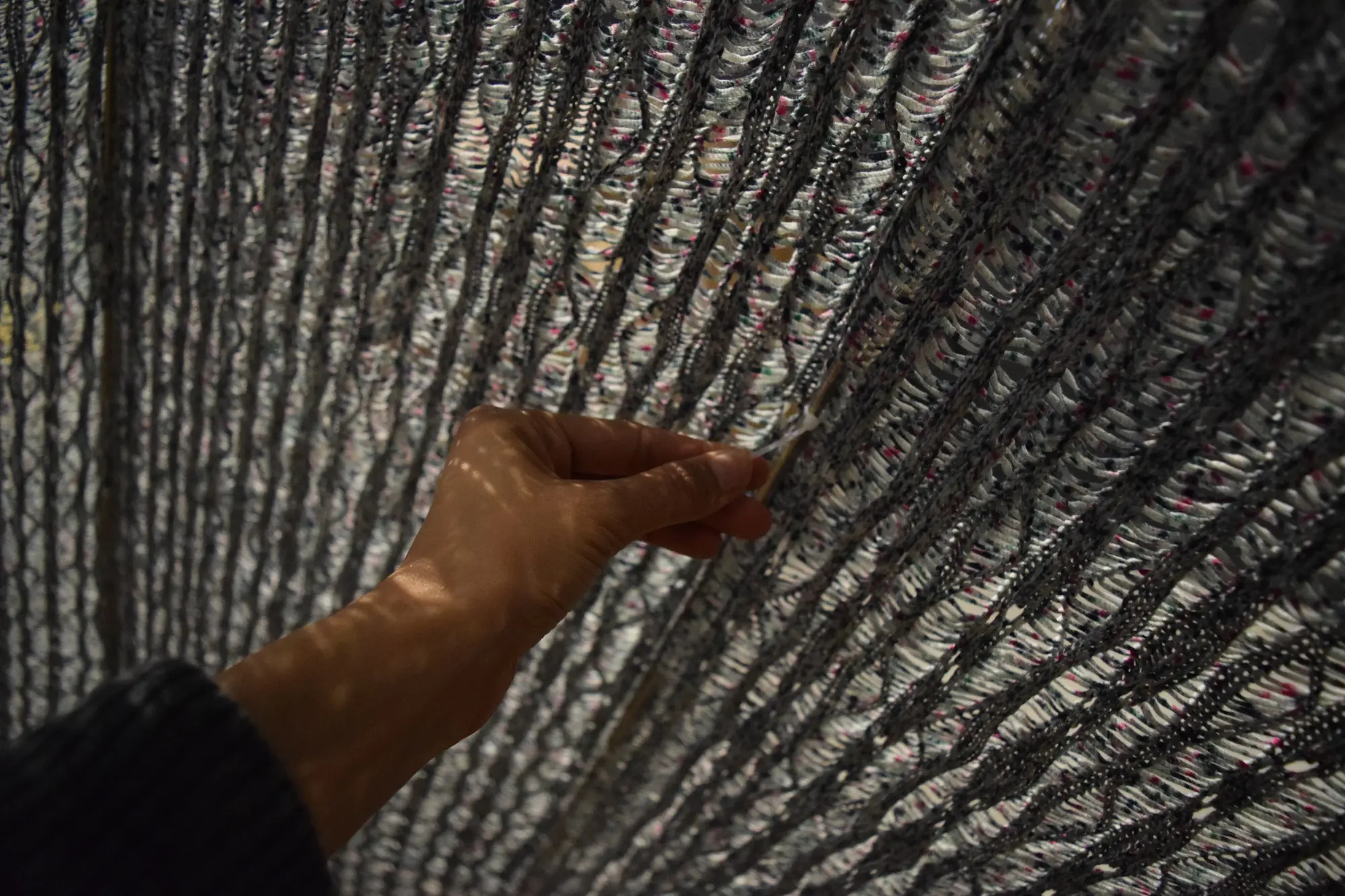
BIOTAPE is the name of the organic cotton yarn produced by Lanificio dell'Olivo, a sponsoring partner, and used for the outer layer of fabric that represents the bark of a tree trunk. The architectural structure made of BIOTAPE is made of 32 knitted sheets, with an elongated openwork and knitting, knitted with a Shima Seiki SSR112 machine, fineness 7, present in the Knit 2 Laboratory of the Design Department. Sustainable yarn is defined by softness, versatility and easy workability and can be implemented with antibacterial properties. Since it is produced in an environmentally friendly manner, it is sustainable and fully biodegradable.
MILLEFORMA
Designer:
Anna Barbara (PoliMI, Design Dep.) with Massimo Gatelli
Producer:
Milleforma
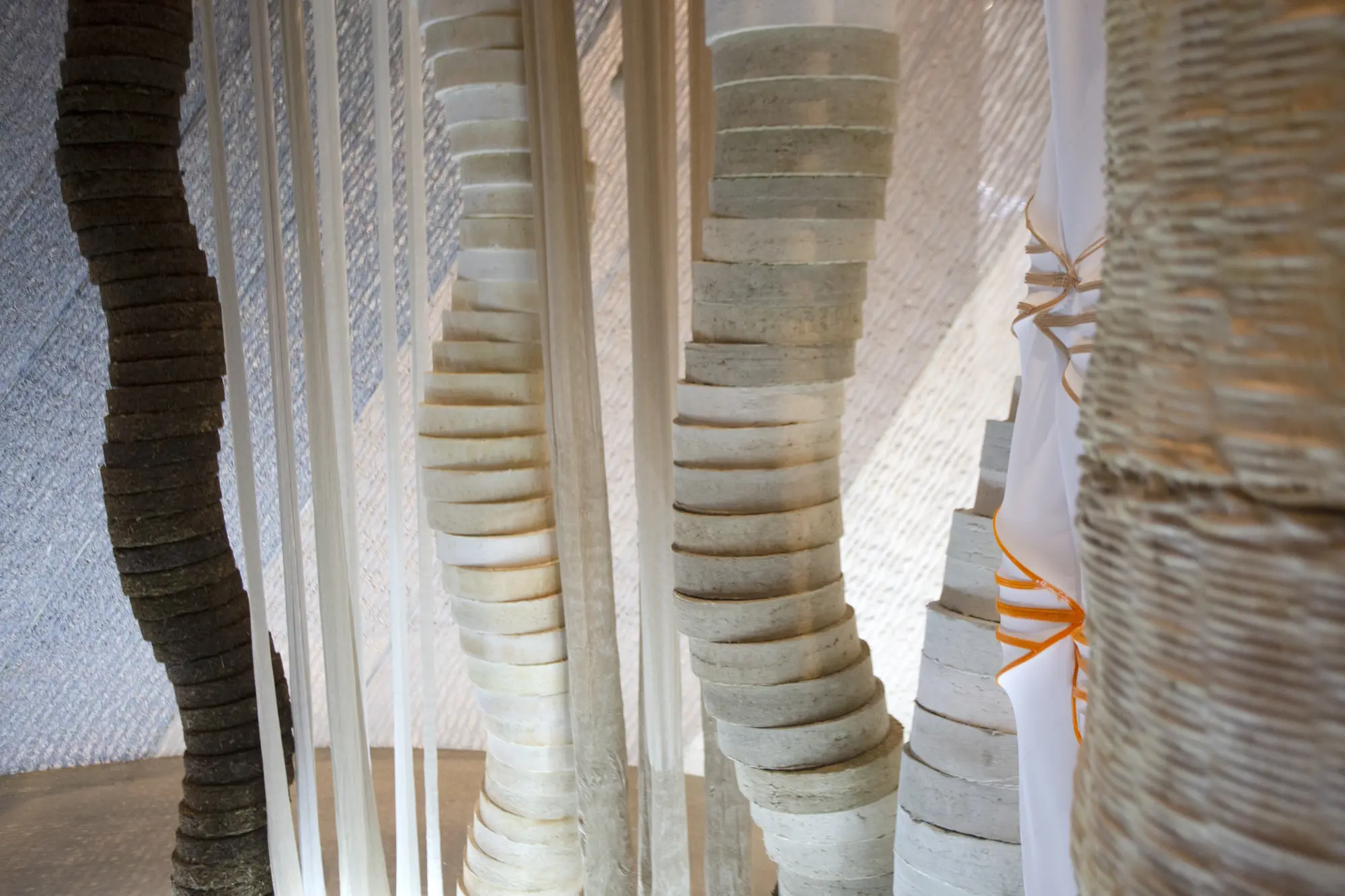
Milleforma is an acoustic covering made of natural material, based on cotton linters mixed with special high quality clays and colored with natural materials with their own fragrance. The production techniques and treatments to which this pulp is subjected also confer fire and water resistance, while maintaining intact the excellent sensory and aesthetic qualities of the finished product. The material, absolutely nature has therefore in addition to the visual characteristics, those of acoustic well-being, purification and deodorization of environments and mechanically resistant. At the end of the Biennale, the installation will be completely recycled and 100% reused.
TEAM
Ingrid Paoletti (PoliMI, Dip. ABC, Material Balance Research)
Anna Barbara (PoliMI, Dip. Design)
Saverio Spadafora (PoliMI, Dip. ABC, ABCLab – MaBa.SAPERLab)
Valeria Marsaglia (PoliMI, Dip. ABC, Material Balance Research)
Maria Anishchenko (PoliMI, Dip. ABC, Material Balance Research)
DIPARTIMENTO DI ARCHITETTURA,INGEGNERIA DELLE COSTRUZIONI E AMBIENTE COSTRUITO:
Material Balance Research, ABCLab, MaBa.SAPERLab, Design&HealthLab
DIPARTIMENTO DI DESIGN: Laboratorio di Design della Maglieria
DIPARTIMENTO DI CHIMICA:Laboratorio Prove Materiali
In collaboration with:
Federico Leoni (Università di Verona, Dip. Scienze Umane)
Stefano Gomarasca (Università degli Studi di Milano, Environmental Science and Policy Dep.)
PARTNER
Aquafil spa, Directa-Plus, Iafil spa, Lanificio Dell’Olivo, Milleforma, Shima Seiki Italia spa, Alessandro Simoni, Sinterama spa, Sesia, Artemaglia
Other contributions for installationMatRes:
BIOLINO
Designer: Maria Anishchenko (PoliMI, ABC Dep., Material Balance Research)
Producer: Artemaglia, Sesia
COFFEE COLUMN
Designer and producer: Esra Kagitci Dede, Begüm Sardan, Nathaly Michelle Rodriguez Torres, Payam Norouzi, Saverio Spadafora, Valeria
Marsaglia (PoliMI, ABC Dep., Material Balance Research, SAPERLab)
2.1 K
3.Designer : Luigi De Nardo (PoliMI, Chemistry Dep.)
Producer: Directa-Plus, in the framework of a cooperation with Politecnico di Milano, under “GRATA” PoR-FESR Regione Lombardia Project.
LOW-MELT
Designer:
Maria Anishchenko (PoliMI, ABC Dep., Material Balance Research)
Producer:
Artemaglia, Sinterama
LUNAR
Designer: Maria Anishchenko (PoliMI, ABC Dep., Material Balance Research)
Producer: Artemaglia, Sesia
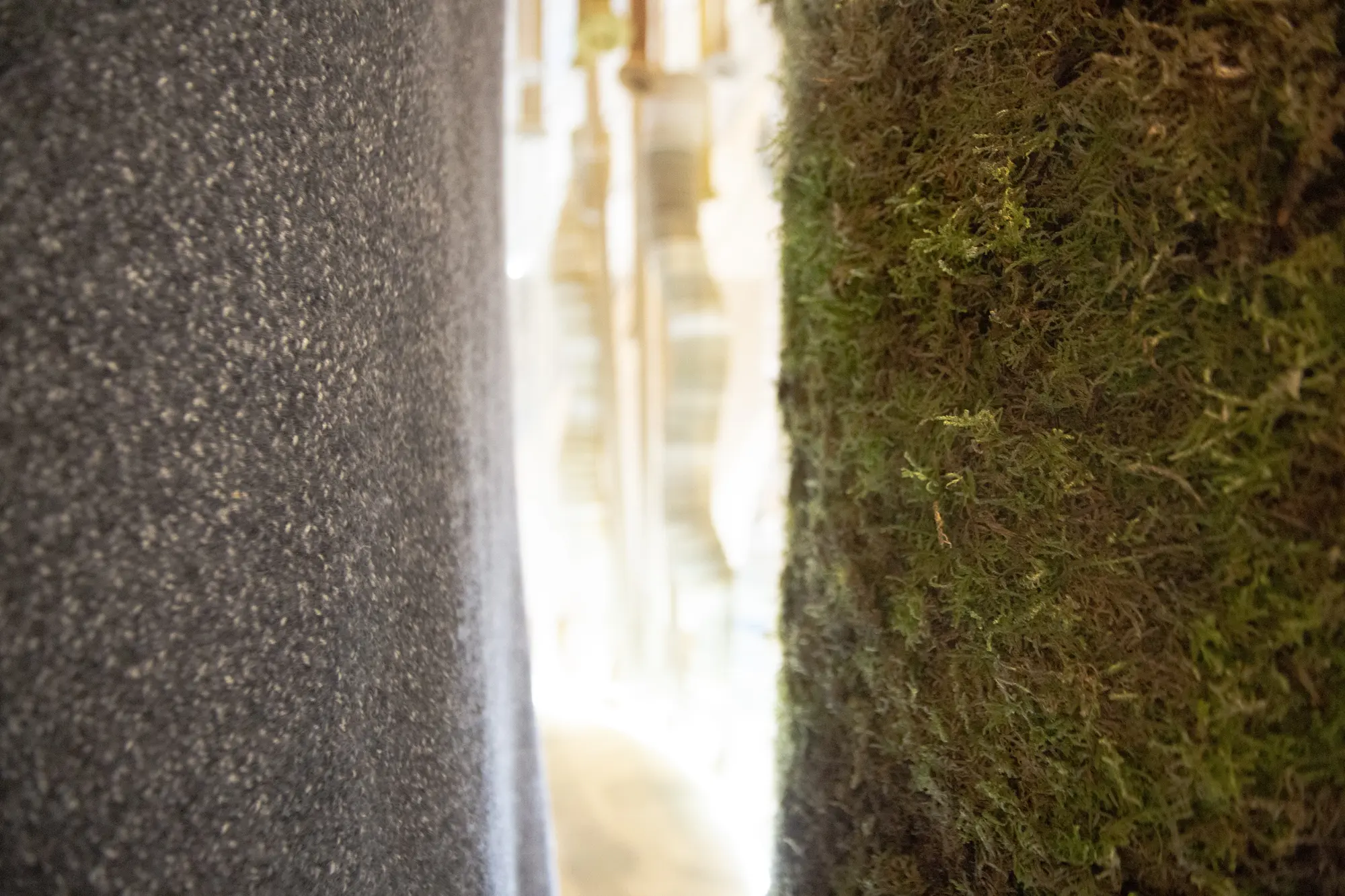
MOSS COLUMN
Designer and producer:
Valeria Marsaglia (PoliMI, ABC Dep., Material Balance Research), Paolo Bombelli (University of Cambridge, Biochemistry Dep., Università di Milano, ESP)
SPACING SPACER
Designer:
Andrea Giglio (PoliMI, ABC Dep., Material Balance Research)
Producer:
Shima Seiki Italia spa, Aquafil spa, Iafil spa, Sinterama spa, Politecnico of Milan (Lab Knitwear, SAPERLab)
4D TEXTILES
Designer and producer:
Giulia Grassi and Xingxin He (PoliMI, ABC Dep., Material Balance Research, SAPERLab)
WOVEN MYCELIUM
Design and production:
Aimi Berton, Fatima Abenova, Valeria Marsaglia (PoliMI, ABC Dep., Material Balance Research, SAPERLab)